
Costco Houses, Bankruptcy is more complicated, Lego over Diamonds, 6 Day workweek in Greece and Let’s sweat it out
Greetings, folks, and a warm welcome to the 9th Edition of Friday Finance Weekly. Can't believe it's been over 2 months already. This edition is coming to you from Toronto. I must be a fortune teller because there's an interesting update on the branded condo story. Congratulations to the new UK Government! I'm not sure what that exactly means because most of their issues stem from Brexit, but yay for change!
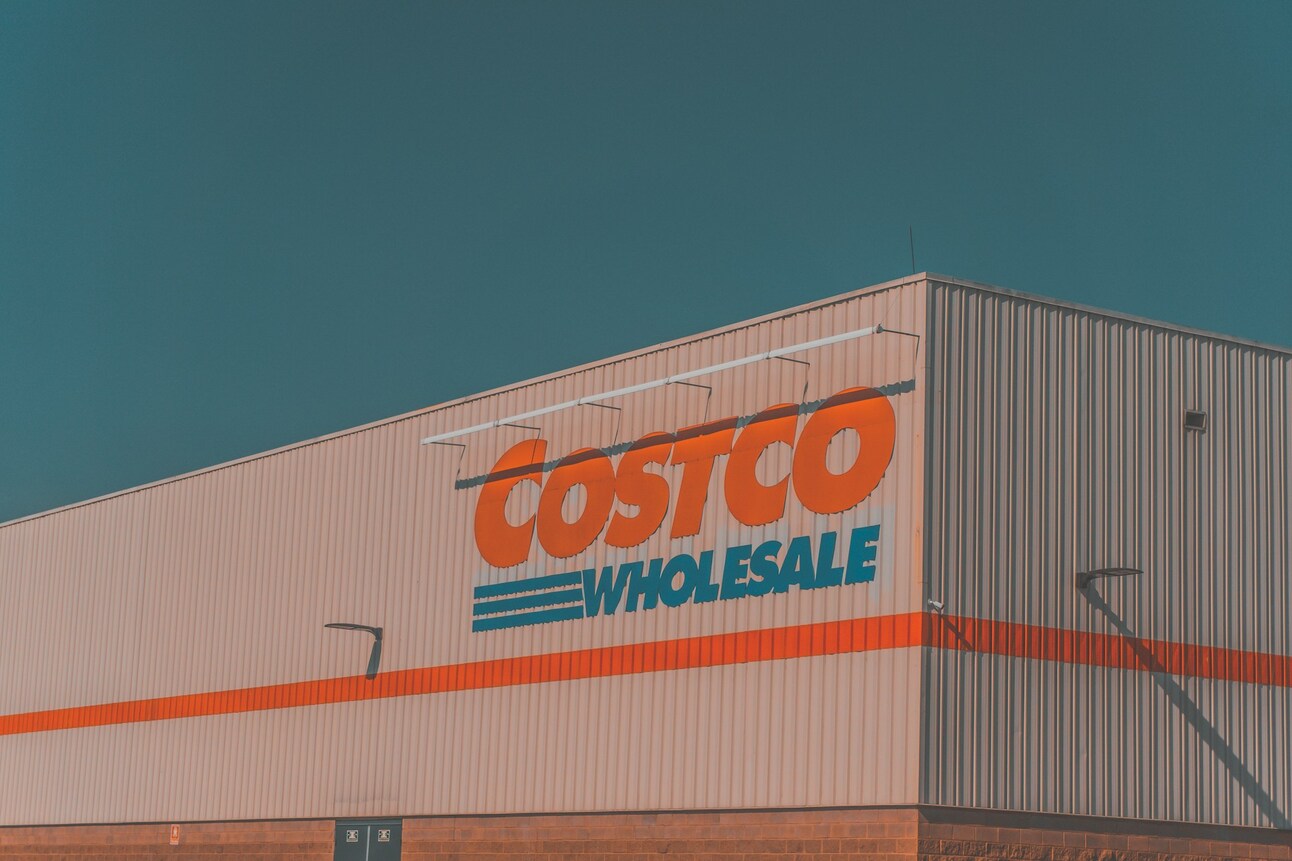
Okay, let's get right to it. As a follow-up to my branded condo development comments, it seems to have resonated. It's not Ikea, but Costco!
- Costco announced that they would be building 800 apartments, including 184 affordable housing units, atop a new warehouse building to help curb LA's affordable housing crisis.
- Located at 5035 W. Coliseum Street, the five-acre development site will include ample parking for shoppers and residents alike, a fitness area, a community space, multiple courtyards, a rooftop pool, landscaped areas, and urban gardens.
- Obtaining approval for these types of stores is notoriously difficult in LA and often costs millions in consulting fees alone. Fortunately, Costco's mixed-use proposal satisfies certain state-level criteria, exempting the company from the discretionary review process.
- The project remains in its permitting stages but is expected to create up to 400 new jobs once approved.
Costco started the year at around $650 per share and is currently trading around $880 per share. So, they are on a cosmic rise. Let’s dig into this a bit. Costco is really getting into affordable housing to make the process easier. Plus, they know that all homeowners will be automatic customers, so it’s a win. Imagine living downstairs for a $1.00 hot dog and 1L Kirkland Vodka deals. Utopia has arrived. (Source: House Beautiful)

The Supreme Court in the US has been a constant source of controversy, mostly in social issues, but they just shaken up bankruptcy laws.
- In a landmark 5-4 ruling last week, the US Supreme Court found that US bankruptcy courts had gone too far in approving non-consensual third-party releases (“NTR”).
- The decision invalidated the $6B settlement that was agreed to by the Sackler family (owners of Purdue Pharma) as compensation for opioid victims and their families. In exchange for that sum, the Sacklers sought a release of any claims held against them by Purdue’s bankruptcy estate, in addition to future opioid-related claims (i.e., any future civil liability).
- The use of NTRs has become an increasingly common feature in restructuring cases, thanks in large part to US bankruptcy judges who have prioritized getting money to victims quickly over chasing down third parties for a larger sum.
- The key advantage of using bankruptcy court as a means of resolving a mass claim is its relative efficiency in reaching a unified settlement. Supporters of mass tort resolution through Chapter 11 believe this decision hinders the ability to reach a resolution in cases involving future claimants and powerful holdouts.
- The limitations of using bankruptcy to resolve mass torts had recently been demonstrated in cases involving Johnson & Johnson’s talc powder and 3M’s military ear plugs. With last week’s decision further cementing those limitations, some experts believe this could mark the end of powerful actors reaching sweetheart deals through bankruptcy maneuvering.
So, what does that mean? Honestly, it’s a toss-up. Do we prioritize a quick settlement over getting every cent? I'm going to start a class-action lawsuit against Air Canada for not providing salted pretzels in economy, but this summer they are offering free beer and wine so that settled. (Source: FT)
Toys can be very profitable for thieves. In fact, Lego is a hot commodity—easier to steal and much more fun.
Last month, a group of robbers broke into a Lego resale store in Los Angeles County and stole between $5,000 to $7,000 worth of merchandise. This heist was just another incident in a much wider crime wave:
- Earlier this month, LAPD recovered over 2,800 boxes of Lego with individual retail values ranging from $20 to $1,000.
- In Wichita, police investigated 19 incidents of Lego theft between January and May of this year.
- In British Columbia, police seized over $150,000 worth of stolen Lego back in March.
According to retail crime experts, Lego sets are frequently targeted due to their ease of resale, durability and ability to fetch close to retail prices if in mint condition. The company also constantly refreshes its products with pop culture references and special edition sets.
These characteristics, along with constant demand for the product, have not only created a market for thieves but also a burgeoning counterfeit market.
In 2023, the Lego Group recorded $9.66 billion in revenue along with operating profits of $2.51 billion.
Imagine watching 'Lord of War' where they exchange Lego pieces instead of diamonds. In other news, the Pope has stopped collecting Birkin Bags and is now collecting Lego sets (not real news). I'm in Toronto, so that's like Drake. (Source: CNN)

Productivity feeling a little low? Well, Greece is contemplating a 6-day workweek.
Last year, in an effort to boost productivity, the Greek government passed a series of labor laws that gave some workers the option of working two additional hours per day or one extra eight-hour shift per week.
The new regulation went into effect on July 1st but will only impact employees of private businesses that provide round-the-clock services. Food services and tourism workers are exempt from this initiative.
These legislative changes have drawn criticism from labor unions and political observers. Unsurprisingly, the country’s workforce had already been outworking those of the U.S., Japan and the 27-members of the European Union. For reference, consider this OECD data from 2022:
- Greece average hours worked = 1,866
- U.S. average hours worked = 1,811 (-3.0%)
- EU average hours worked = 1,571 (-18.8%)
- OECD average hours worked = 1,746 (-6.9%)
Greece’s pro-business government has said these measures are designed to support employees who are not receiving sufficient overtime compensation and to help crack down on undeclared labor.
The decision bucks a global trend toward the adoption of shorter workweeks. According to a KPMG survey, almost one-third of U.S. businesses are considering cutting down their workweek.
Greek Economic Data, Spring 2024:
- GDP Growth = 2.2%
- Inflation = 2.8%
- Unemployment = 10.3%
- Gross public debt (% of GDP) = 153.9%
- Current account balance (% of GDP) = -5.2%
Seems like the Greek Government isn’t putting their money where their mouth is. How does exempting 2M government employees make sense? I didn’t realize that there was much business outside these 2 segments. But looking at all the economic factors I think Greece needs full scale structural reform, but I doubt they’ll do it.
Fun fact (maybe not so fun) Pheidippides Ran from Marathon to Athens (two cities in ancient Greece) to announce the Greek victory at Marathon. He stated, “Rejoice, we conquer!” then his heart burst and he died. Marathon distance was a little over 26 miles, hence while the rough distance of modern marathons. (Source: CNBC, OECD, European Commission)
This week's book summary is 'Sweaty, Naked Apes – the Origins of Sweat Glands.' Nothing finance-related, but it’s a good follow-up from a marathon.
Common to most mammals are millions of eccrine sweat glands responsible for producing sweat. What makes humans unique is our reliance on these glands as a primary cooling mechanism.
Most mammals only have eccrine pores on the soles of their feet or hands. In moments of stress—typically followed by flight instinct—these glands produce sweat, which provides added friction to help with climbing and traction.
Comparing humans to chimpanzees (with approximately a 99% genome match), we see that chimps rely heavily on panting to combat hot weather, as evaporation isn’t very effective on furry skin. In contrast, humans shed their body fur in favor of miniaturized hair follicles to take full advantage of our body-wide eccrine glands.
Although this evolutionary split is believed to have occurred roughly 35 million years ago, the inability of eccrine glands to fossilize makes it challenging to determine which came first—loss of hair or expansion of glands.
Studying the development of fetuses in utero, scientists have observed that our first sweat glands appear on the hands and feet before expanding across the body by the halfway mark. They are now finding evidence showing that as precursor cells transform into sweat glands, they also inhibit the formation of hair.
Sorry for being sweaty; it just felt muggy in Toronto, so I had to make the connection. Have a fantastic weekend, and please don’t hesitate to forward my post to friends and family.
Cheers,
Sam